The post DMs, Discords, and Deception: The Social Life of Crypto Phishing Attacks first appeared on The Shib Daily.
]]>- Phishing attacks have evolved beyond emails – Scammers now target trusted crypto spaces like Discord, Telegram, Twitter, and DMs, blending in with the community to exploit trust and FOMO.
- Human psychology is the main weapon – Impersonation, urgency, and herd behavior make users more likely to fall for scams, even if they understand technical security.
- Common social phishing tactics to watch – Fake DMs promising free tokens or NFT drops, impersonating bots or verified accounts, and malicious smart contract approval requests are all traps to avoid.
- Prevention is a mix of habits and awareness – Verify accounts and links, avoid suspicious transactions, stay vigilant in your community, and slow down before acting to outsmart phishing attacks.
 Listen to This Article
You’re scrolling through Discord, excited about the latest NFT drop, when a DM pops up. It’s from someone claiming to be the project’s founder, offering you a “free mint” if you just click a link. It looks legit, the timing feels perfect, and before you know it, your wallet is at risk. Welcome to the wild world of phishing attacks, and yes, even in communities you trust, scammers are lurking.
Phishing has come a long way from sketchy emails with bad grammar. Today, attackers have learned to blend in with the groups, chats, and channels you spend your time in. They exploit trust, curiosity, and the fear of missing out to trick even experienced users.
The Evolution of Phishing in Crypto
Phishing attacks have come a long way since the days of poorly written emails promising you a million dollars if you just sent your password. In the crypto world, scammers have leveled up, moving into the very communities where you feel safest. Now it’s not just emails; it’s Twitter DMs from fake influencers, Telegram groups with bots pretending to be mods, and Discord servers that look official but are anything but.
Traditional warnings like “don’t click suspicious links” or “verify the sender” are no longer enough. These attacks are slick, blending in with real conversations, mimicking official handles, and even using project-specific jargon that newbies and veterans alike recognize. The more familiar the environment, the easier it is to let your guard down.
How Social Dynamics Make Phishing Effective
Phishing attacks aren’t just about clever links or fake websites. Scammers also play the human game, exploiting how we think, trust, and react in social settings. Understanding these social dynamics is key to staying safe in crypto communities.
Trust and Authority: Impersonation Tricks
Many phishing attacks succeed because we trust authority figures. Scammers impersonate founders, moderators, or influencers, making their messages seem official. That “friendly DM from the project team” can look 100% legitimate, and suddenly clicking a suspicious link feels normal.
FOMO and Urgency: The “Act Fast” Trap
Crypto culture thrives on urgency and exclusivity, and scammers use that against you. Fake “airdrops” or time-limited offers make users rush into actions like approving transactions or connecting wallets. A little pause and a double-check can save a lot of headache.
Herd Mentality: Following the Crowd
Humans naturally follow what others are doing, and scammers exploit this. Seeing a flood of users talking about free tokens or a hot NFT drop can make it tempting to jump in. The more people appear involved, the easier phishing attacks succeed.
By recognizing how trust, FOMO, and social pressure work together, even beginners can spot the tricks and make smarter decisions in crypto communities.
Common Social Phishing Tactics in Crypto
Phishing attacks in crypto are getting more creative, hiding in places where you feel safe, like DMs, Discord servers, and social media. Recognizing the tricks is key to staying safe.
Fake DMs Promising Free Tokens or NFT Airdrops
Scammers often slide into your DMs with offers that seem too good to be true. They promise free tokens or exclusive NFT airdrops if you click a link or connect your wallet. Watch out for:
- Messages from accounts claiming official status but aren’t verified
- Promises of “instant” rewards or limited-time offers
- Links that redirect to unfamiliar websites
Discord Bot Impersonation and Malicious Server Links
Discord servers are a favorite hunting ground. Bots or fake accounts can impersonate moderators or project teams, sending links to steal your crypto. Red flags include:
- Unexpected DMs or links from server bots
- Messages urging you to download software or visit unverified sites
- Requests to verify wallets in unusual channels
Fake “Verified” Accounts on X and Telegram
Scammers clone well-known accounts to gain your trust. They may post fake giveaways or urgent instructions to get you to act fast. Things to watch for:
- Slightly altered usernames or profile handles
- Urgent messages pushing you to click links immediately
- Claims that everyone else is “already participating”
Approval Scams: Malicious Smart Contract Requests
Even experienced users can fall for this sneaky trick. Scammers get you to approve transactions on a smart contract that looks harmless. After approval, they can move your tokens. Key warning signs:
- Requests to approve unlimited or unusually large token amounts
- Contracts that are new or unverified
- Offers that seem too simple or reward-heavy
By keeping an eye out for these patterns, you can spot phishing attacks before they hit and keep your crypto safe.
How Users Can Protect Themselves
Phishing attacks can be tricky, but most of them can be avoided with a mix of smart habits, community awareness, and a little healthy skepticism. Here’s how to keep your crypto safe without turning every click into a stress test.
Verify Accounts and Links Before Interacting
Not everyone claiming to be official is who they say they are. Take a moment to confirm identities before engaging. Tips include:
- Check profile handles carefully for subtle changes
- Hover over links to see the real URL before clicking
- Use official project channels to confirm announcements or DMs
Avoid Signing Suspicious Transactions or Connecting Wallets to Unknown dApps
Every approval you give can be risky. Only interact with platforms you trust:
- Never approve transactions from unknown contracts
- Avoid connecting your wallet to unverified dApps
- Double-check every request, even if it seems legitimate
Community Vigilance
Crypto safety is a team sport. Communities play a huge role in stopping phishing attacks:
- Report suspicious accounts or links to moderators
- Educate peers by sharing tips and red flags
- Utilize moderation tools to block bots and malicious activity
Mental Strategies: Slow Down and Question Urgency
Scammers thrive on speed and pressure. Slowing down helps you think clearly:
- Pause before clicking or signing anything
- Question offers that feel too good to be true
- Double-check instructions, links, and requests, even from familiar sources
By combining verification, caution, community awareness, and mindfulness, you can greatly reduce your risk and enjoy crypto without constantly looking over your shoulder.
Staying One Step Ahead
Phishing attacks are evolving, and as crypto grows, social spaces like Discord, Telegram, and Twitter can be just as risky as technical vulnerabilities in wallets or smart contracts. Scammers know how to blend in, play on trust, and exploit human behavior to get what they want.
The key takeaway? Stay alert, verify accounts and links, and don’t let FOMO push you into hasty decisions. Every user has a role to play in keeping the community safe. By reporting suspicious activity, educating peers, and thinking before you click, you can help build a stronger, smarter crypto ecosystem.
At the heart of it, understanding human behavior is your ultimate defense. Phishing attacks may never disappear entirely, but recognizing the psychology behind them gives you the power to avoid the traps and enjoy the world of crypto safely.
Read More
- Crypto Scam: Fake Law Firms Target Victims, What SHIB Holders Should Know
- Crypto User Loses $908K in Sneaky Phishing Scam — What It Means for SHIB Holders
- How to DYOR and Avoid Crypto Scams Like a True Shib Army Pro
Michaela has no crypto positions and does not hold any crypto assets. This article is provided for informational purposes only and should not be construed as financial advice. The Shib Magazine and The Shib Daily are the official media and publications of the Shiba Inu cryptocurrency project. Readers are encouraged to conduct their own research and consult with a qualified financial adviser before making any investment decisions.
The post DMs, Discords, and Deception: The Social Life of Crypto Phishing Attacks first appeared on The Shib Daily.
]]>The post The Shib Crypto Recap: Friday first appeared on The Shib Daily.
]]>Stolen Fortunes: $750 Million Lost in Q3 2024 Web3 Hacks and Michael Terpin’s $24 Million Lost in Recent SIM Swap Scam
In its Q3 2024 Hack3d report, CertiK found that Web3 security breaches resulted in over $750 million lost from 155 incidents. This brings the total losses for 2024 to almost $2 billion. Phishing and private key compromises led to $668 million in losses. One major phishing incident involved a whale losing $238 million in Bitcoin. Private key attacks resulted in $324.4 million lost over ten incidents. The report highlighted two key breaches: WazirX lost over $231 million in July, and a whale lost 4,064 BTC valued at $238 million in August. Ethereum was the top target in Q3 2024, with $387.89 million lost due to various hacks and scams.
On the subject of scams, prominent cryptocurrency investor Michael Terpin has sued a teen for allegedly stealing $24 million worth of digital assets via a SIM swap scam. He claims the thief exploited a vulnerability in his two-factor authentication (2FA) system. Additionally, Terpin is pursuing $45 million in damages from AT&T, accusing it of negligence in preventing the attack. The teenager reportedly gained control of Terpin’s SIM card, which allowed him to bypass the 2FA safeguards. A SIM swap attack involves stealing a person’s phone number, enabling the attacker to intercept calls and messages. This tactic undermines security measures that rely on SMS for verification, often using public data or social engineering, similar to incidents involving Ethereum co-founder Vitalik Buterin.
Taiwan’s FSC Tightens Grip on Crypto: New Anti-Money Laundering Regulations Announced
Taiwan’s FSC has unveiled stricter anti-money laundering (AML) measures for cryptocurrency services. They have created a draft titled the “Money Laundering Prevention and Registration Measures for Virtual Asset Service Providers” or VASP Registration Measures. This includes amendments to existing regulations and introduces new anti-terrorism measures. Key aspects cover business categories, registration procedures, and industry compliance. The FSC will eliminate the current compliance statement system, requiring all service providers to register under the new framework.
A New Era in Banking in 2025: Swift to Test Digital Asset Transactions and Spain’s BBVA to Launch Own Stablecoin
Starting in 2025, banks across North America, Europe, and Asia will conduct live trials of digital asset transactions using the Swift network. Swift intends to link central bank digital currencies (CBDCs) globally while merging digital asset and cash networks. The trials will focus on payments, foreign exchange, securities, and trade, allowing multi-ledger Delivery-versus-Payment and Payment-versus-Payment transactions. With 134 countries exploring CBDCs, the tokenized asset market could hit $16 trillion by 2030. These trials aim to integrate digital assets with traditional currencies, enhancing transaction efficiency.
In a similar development, BBVA, Spain’s second-largest bank, plans to launch its own stablecoin in 2025 in partnership with Visa. Stablecoins, which are digital currencies pegged to assets like the U.S. dollar or euro, are increasingly popular among businesses and consumers. BBVA is currently testing its stablecoin in the sandbox phase of Visa’s new project. The aim is to move to the prototype and operational phases by next year. Chainalysis reports that users have utilized stablecoins for over half of all on-chain transaction volume involving centralized services from June 2022 to July 2023.

ShibaCon, a vision of Shiba Inu creator Ryoshi, is set to make history in Thailand. Join the movement and be part of this landmark event in November! Tickets are available now at shibacon.shib.io.
Read More
- Bitcoin Mining, AI Data Centers Drive Energy Demand in Texas – Report
- Uptober Blues: Can Crypto Overcome Market Anxieties and Geopolitical Strife?
- The Shib Crypto Recap: Thursday
The post The Shib Crypto Recap: Friday first appeared on The Shib Daily.
]]>The post Phishing Attack Drains $32M From Crypto Holder first appeared on The Shib Daily.
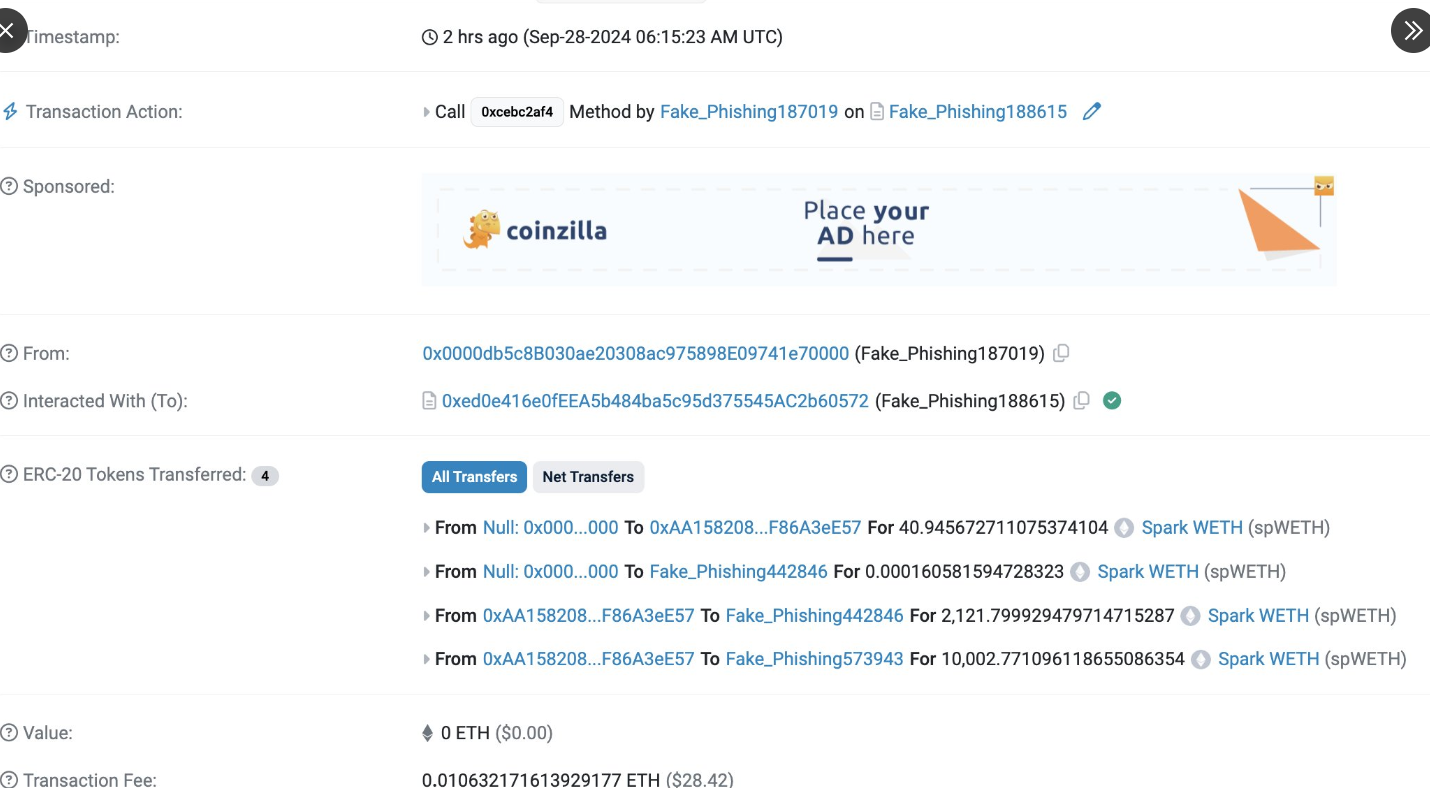
]]>Web3 data analysis platform Lookonchain reported this on X last Saturday.
According to Arkham, an analytics platform for Ethereum, the compromised wallet may be linked to DiscusFish (also known as @bitfish1 on X). This potential association raises concerns about the vulnerability of even seasoned cryptocurrency users to phishing attacks.
Phishing Attacks: A Growing Concern for Crypto Holders
Phishing scams have long been a significant risk for crypto holders, often resulting in substantial financial losses. It is a type of cyber fraud where attackers impersonate trustworthy organizations and trick individuals into revealing sensitive information, such as passwords or credit card numbers.
Typically, the attack begins with a deceptive email or message that encourages the victim to click on a malicious link or download an attachment. This often redirects them to a fraudulent website or software designed to harvest their confidential information.
According to data from Statista, over 963,000 unique phishing websites were identified globally in the first quarter of 2024. Notably, approximately 2% of these phishing sites were related to cryptocurrencies.
A report from PeckShieldAlert also indicated that more than ten significant hacks took place in August, resulting in approximately $313.86 million in stolen funds. Notably, around 93.5% of this total loss stemmed from two large-scale phishing attacks, which together accounted for $293.4 million.
Major Financial Losses and Growing Vulnerabilities in Crypto
Phishing attacks appear to be the primary threat in August, revealing the ongoing susceptibility of the cryptocurrency sector to deceptive tactics. The largest phishing incident involved the theft of $238 million in Bitcoin (BTC), followed closely by another major attack that resulted in the loss of $55.4 million in DAI, a widely used stablecoin.
In another scenario, an alert revealed that a suspicious transaction involving Bedrock DeFi led to the loss of approximately $1.7 million from its UniBTC liquidity pool. The stolen funds were reportedly transferred to an address associated with Tornado Cash, a privacy-centric service.
To mitigate the risk of falling victim to phishing attacks, experts advise crypto holders to exercise extreme caution when interacting with unknown links or signing digital signatures. Double-checking all transaction details and verifying the legitimacy of requests can help prevent unauthorized access to valuable assets.
Read More
- Security Breaches Hit Crypto Hard: $313 Million Stolen in August, Phishing Emerges as Top Threat
- $1.7 Million Drained from Bedrock DeFi UniBTC Pool in Suspected Attack
- Bankroll Status Loses $230K to Hacker
The post Phishing Attack Drains $32M From Crypto Holder first appeared on The Shib Daily.
]]>The post What Is a Phishing Attack and How Can You Avoid It? first appeared on The Shib Daily.
]]>A phishing attack is a fraudulent scheme where scammers impersonate legitimate entities to deceive individuals into providing sensitive information, such as passwords or credit card details. The attack typically begins with a deceptive email or message that entices the victim to click on a malicious link or download an attachment, leading them to a fake website or software that collects their confidential information.
Latest Phishing Attack Statistics
According to data from Statista, over 963,000 unique phishing websites were identified worldwide in the first quarter of 2024, and two percent is attributed to cryptocurrency. While two percent may seem like a minor fraction, it reflects a continuous trend of malicious entities using crypto to victimize users worldwide. The prevalence of these phishing scams underscores the importance of user awareness and security.
Exploiting Psychology and Technology
Phishing attacks often exploit human psychology and technological vulnerabilities to deceive individuals into revealing personal information, which leads to potential financial losses and compromised security.
According to a blog post by cybersecurity awareness firm MetaCompliance, phishing attacks are effective primarily due to the art of deception mastered by the perpetrators. They use tactics like instilling fear and urgency, exacting authority which leads to trust among victims, using the innate nature of humans to act upon their curiosity and greed, and social engineering.
As phishing attacks have developed, they increasingly take advantage of technological risks. There are numerous phishing methods that scammers utilize through technology. These include smishing (SMS phishing), vishing (voice phishing), social media phishing, AI phishing, and quishing (QR code phishing). When vishing is combined with other methods, it forms what is known as hybrid phishing, a recent trend in phishing attacks.
How to Recognize A Phishing Attack
Phishing messages often create a false narrative to deceive you into clicking links or opening attachments. You might receive an unexpected email or text that appears to come from a trusted source such as your bank, credit card company, or utility provider. It could also be from a payment app or website.
Scammers often pretend to alert you about suspicious account activity or unauthorized login attempts. Others might insinuate there’s an issue with your account or ask you to verify personal information. Sometimes, you might even receive an unfamiliar invoice or a message requesting you to click a payment link that contains malware. Be wary of any text or email promising free gifts, like government refunds or coupons for free items.
Many phishing scams in the crypto frontier come in the form of fake token airdrops. Fraudsters create imitation websites that look like genuine airdrop campaigns and promote them through a range of methods. These con artists trick users into revealing private information or connecting their cryptocurrency wallets to the fraudulent site. In the end, users never receive the tokens and instead discover their wallets have been drained.

How to Avoid Phishing Attack
The Federal Trade Commission (FTC) offers valuable information for the general public on identifying phishing attempts and protecting yourself from them.
For those in the Web3 space, it can be a bit tricky but there are ways you can safeguard against phishing scams involving cryptocurrency. To secure your crypto assets, never store seed phrases or private keys on internet-connected devices, and create strong passwords for your wallets.
Avoid using public Wi-Fi when accessing wallets and refrain from linking them to unfamiliar websites promising enticing rewards. Always enable two-factor authentication and keep software wallets updated to address potential vulnerabilities. Be cautious with emails and unknown links, and always verify project details through official channels while resisting hasty decisions that could compromise your portfolio.
You can also report any suspected phishing emails or messages to the FTC by forwarding them to [email protected], a contact point used by the Anti-Phishing Working Group, consisting of internet service providers, cybersecurity vendors, financial services, and law enforcement bodies.
Read More
- Truflation Suffers $5 Million Loss in Malware Attack
- 3 Most Common Crypto Scams in 2024 and How to Spot Them
- How to Report Crypto Frauds and Scams to the FBI
The post What Is a Phishing Attack and How Can You Avoid It? first appeared on The Shib Daily.
]]>